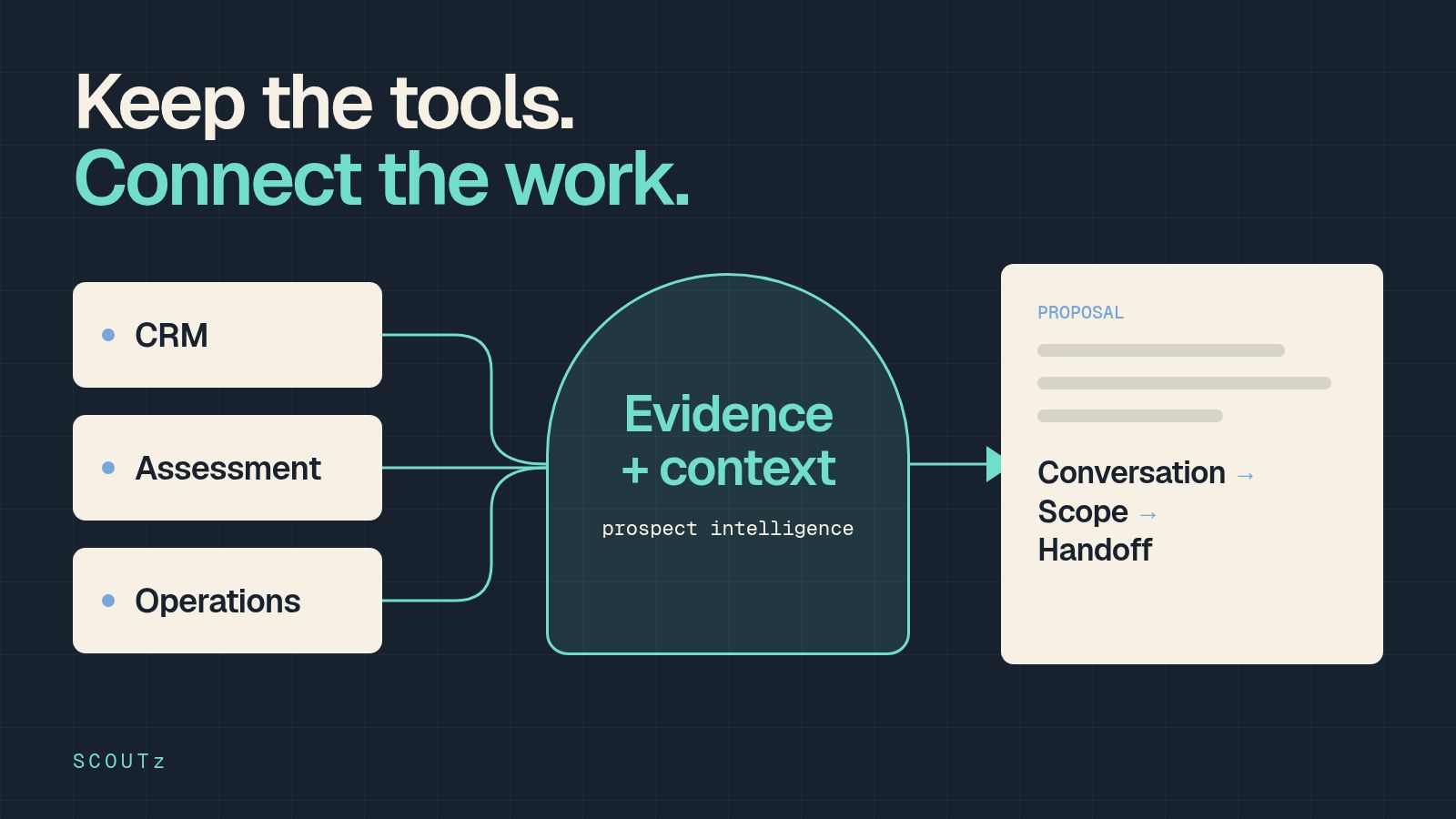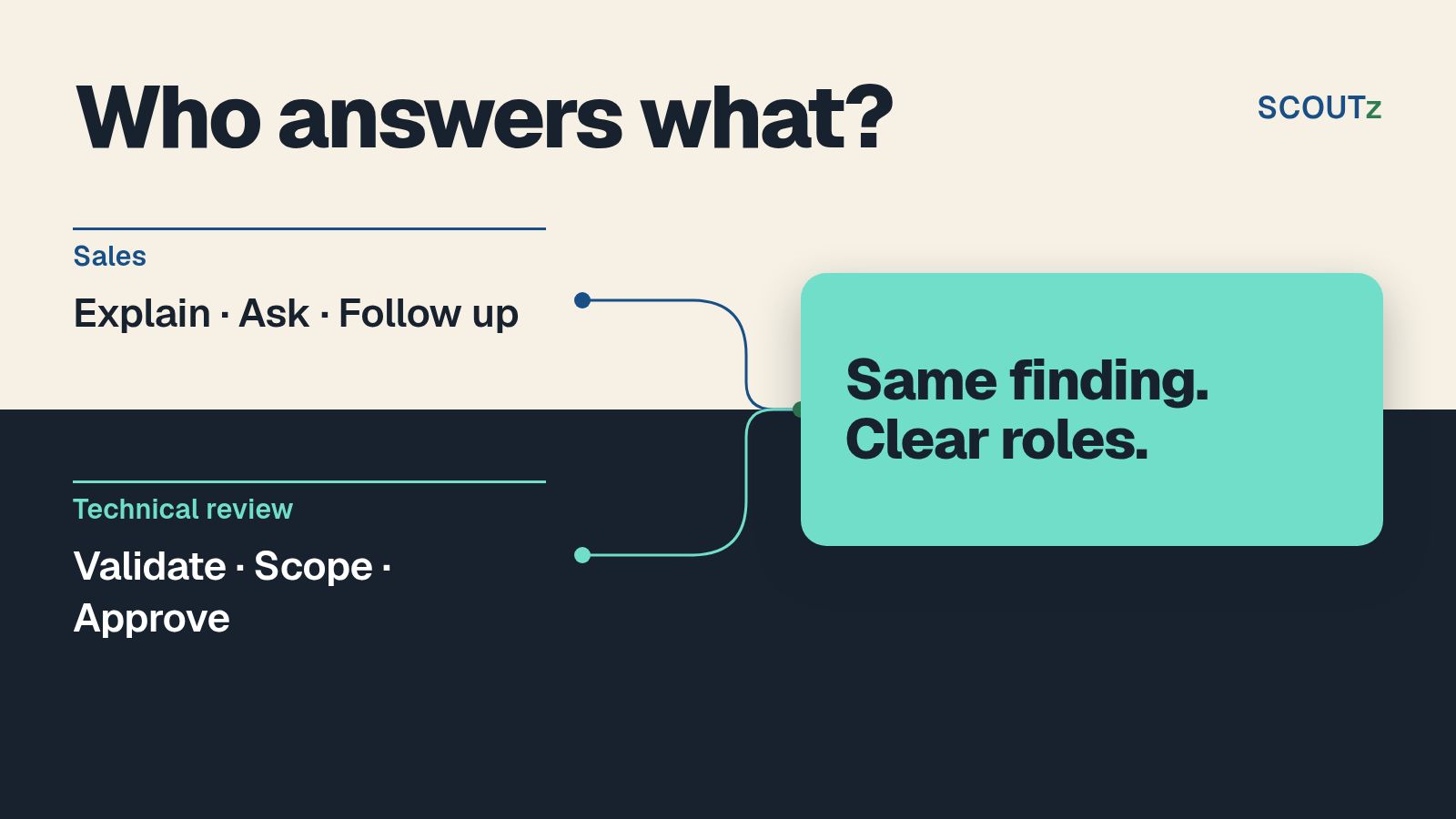
Interpret Microsoft 365 guest access findings by separating the guest identity, the access you actually observed, and the business purpose the client confirms. Record the evidence source, collection date, and inspection limits before recommending action. A guest account is not proof of inappropriate access, a breach, or an unresolved problem.
- SCOUTz supports MSPs learning how to interpret microsoft 365 guest access findings for clients through dated evidence.
- Microsoft Entra guest identities do not, by themselves, establish current access to a specific resource.
- Public-domain evidence cannot establish Microsoft 365 tenant permissions; use customer-authorized read-only evidence.
- Unread permissions and unavailable sign-in records remain unknown, not clean.
How do you interpret Microsoft 365 guest access findings for clients?
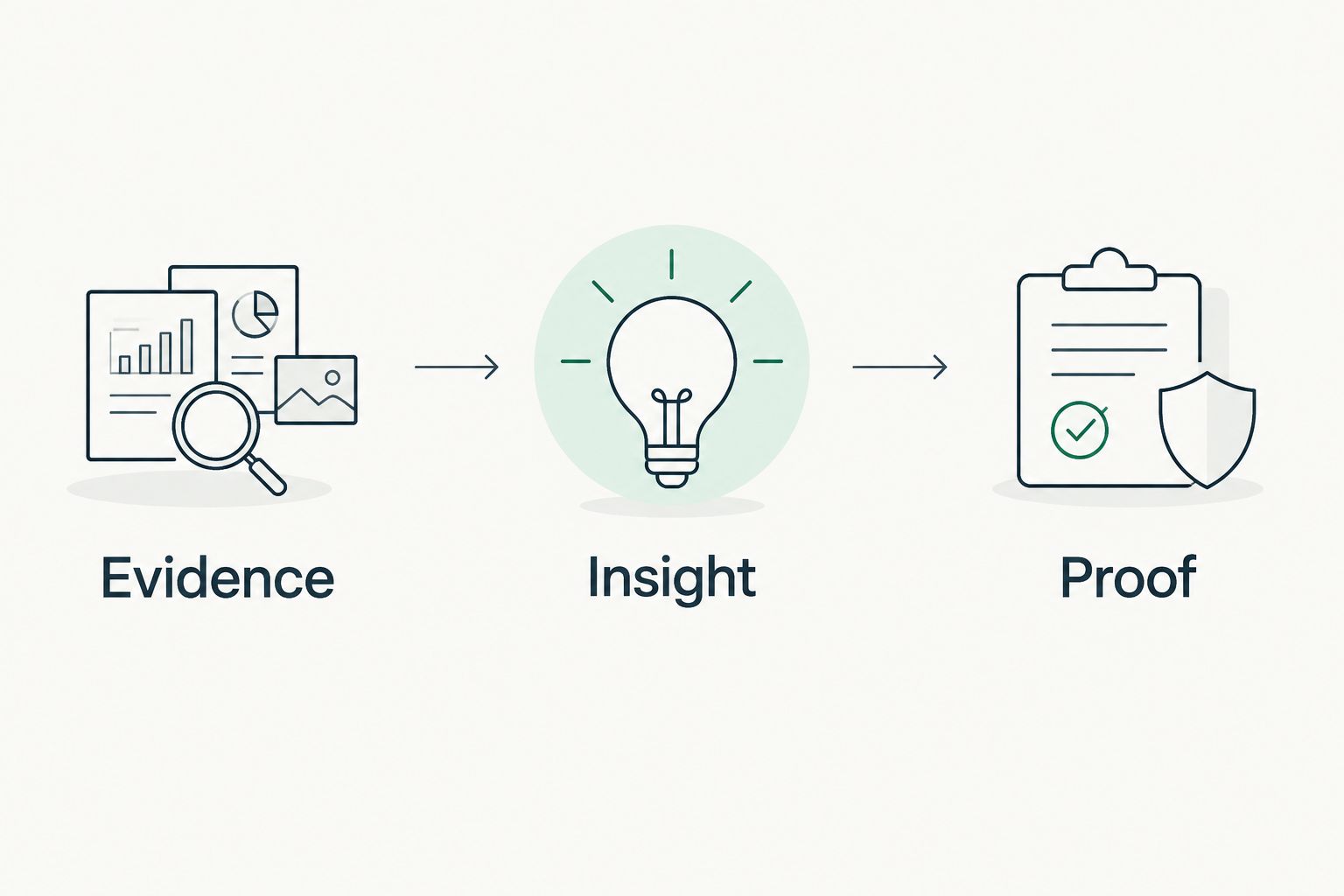
Use evidence → insight → proof. Establish what the authorized review observed, explain the question that observation raises, and identify what would verify the answer. Keep those stages separate in the report and the client conversation.
For MSP sales preparation, SCOUTz provides dated cybersecurity evidence and prospect intelligence through domain and Microsoft 365 reviews. That evidence supports your preparation; it does not replace your assessment of the client's intended access.
Follow this sequence:
- Establish scope. Identify the tenant, collection date, authorized permissions, and resources inspected.
- Read the identity. Confirm which directory object the finding describes and what attributes were observed.
- Trace access. Inspect available resource permissions, memberships, and sharing evidence rather than inferring access from identity alone.
- Check activity. State the source and coverage of any sign-in or resource activity records.
- Confirm purpose. Ask the client who owns the relationship and whether the access remains necessary.
- Agree on proof. Record the authorized decision and the evidence needed to verify its implementation.
Do not skip from the identity to the recommendation. The middle steps determine whether the finding describes expected collaboration, an access question, or a verified mismatch with the client's requirements.
Why this matters
A guest identity can represent legitimate collaboration with a supplier, adviser, or project partner. Removing it without checking dependencies can interrupt work. Leaving access unchanged without checking its purpose leaves the client with an unanswered governance question.
The finding itself does not resolve that trade-off. Your job is to make the evidence understandable without making it say more than it does.
For a 2026 client review, distinguish the date you prepared the report from the date each observation was collected. A report date is not an evidence refresh. If you reuse an earlier observation, preserve its original timestamp and recheck it before presenting it as current.
Start with the right evidence source
Public-domain reviews and customer-authorized Microsoft 365 reviews answer different questions. They belong in separate evidence categories, even when both appear in the same proposal.
| Evidence source | Best for | What it supports | Strength | Limit |
|---|---|---|---|---|
| Public-domain evidence | Preparing questions about external domain and email configuration | Observations about publicly accessible records and configuration | Supports preparation without tenant access | Does not establish guest identities or tenant resource permissions |
| Customer-authorized read-only tenant evidence | Interpreting guest identities and the tenant data actually inspected | Observations within the granted permissions and collection scope | Connects findings to internal evidence | Unread resources and unavailable records remain unknown |
| Client-confirmed business context | Deciding whether an external relationship remains necessary | The intended purpose, owner, and access requirements | Explains why access exists | Does not independently prove the technical configuration |
Read-only describes the access boundary, not complete coverage. An authorized review still has limits. Permissions, collection scope, and available records determine which conclusions the evidence supports.
Identify those limits beside the finding. Do not bury them in a disclaimer that the client must find elsewhere.
Evidence: what did the review actually observe?
Start with the exact object and property. A directory entry with a guest user type is evidence about that identity's classification. It is not a complete inventory of the files, sites, teams, applications, or other resources the person can use.
Microsoft Entra guest identities and resource-level external sharing are related, but they are not interchangeable. A guest list alone is not a complete external-access review. Conversely, a sharing observation should not be described as a directory-wide permission assessment.
Keep the finding record specific:
- Source: Name the directory, permission record, or activity record inspected.
- Date: Preserve the collection timestamp and the time window of any activity evidence.
- Observation: Describe the field, membership, permission, or event actually returned.
- Coverage: Identify which resources and records were included.
- Limit: Identify what the review did not read or could not determine.
For your 2026 reporting template, put these fields next to the finding rather than only on the cover page. The reader needs to distinguish a dated identity observation from a current resource-access check.
If a field was not returned, say it was not observed. Do not translate an unread permission into no access or an unavailable activity record into no activity.
Insight: what question does the finding raise?
An observation becomes useful when it leads to a specific business question. Keep the question narrow enough for the client to answer and the practitioner to verify.
A guest identity raises questions about the external relationship and its owner. An observed resource permission raises a question about whether that particular access matches the relationship. An activity record adds context about observed use within its coverage, not a verdict about whether access is appropriate.
Use the same structure in your explanation:
- Evidence: State the observed identity, permission, or activity record.
- Insight: Explain which access decision remains unclear.
- Proof: Specify the client confirmation and technical verification needed to settle it.
A finding is not a reason to declare an incident. It is a reason to ask a better question.
For example, an observed guest membership supports a discussion about that membership. It does not establish that the guest downloaded data, that the account was compromised, or that the client wants to buy a service. Those are separate claims requiring separate evidence.
Proof: what would settle the access decision?
Proof requires both an intended state and evidence of the actual state. The client confirms what the external party should be able to do. The authorized technical review checks whether the observed configuration matches that requirement.
Ask the client to identify the relationship owner, the work the guest supports, and the resources required. Then inspect the relevant access within the authorized scope. If your review cannot inspect those resources, record the gap and agree on an authorized follow-up.
A 2026 proposal should distinguish a verified mismatch from work proposed to resolve uncertainty. Do not describe an unanswered question as a completed diagnosis.
After an approved change, verify the relevant state again. Record what changed, when it was checked, and which resources were covered. Removing a directory object is not a substitute for documenting the specific access question the client asked you to resolve.
Why guest access interpretations vary
The same type of finding can mean different things in different client environments. The interpretation depends on evidence and purpose, not on how alarming the finding sounds.
- Business purpose: A current external project and a finished engagement require different access decisions.
- Resource scope: An identity observation and a verified permission on a specific resource support different conclusions.
- Permission detail: The type of access matters; a membership label alone does not explain every permitted action.
- Evidence coverage: A review of selected resources does not establish the state of uninspected resources.
- Activity coverage: An absence of recorded events only describes the records and period examined.
- Collection timing: A dated observation does not prove that configuration remained unchanged afterward.
Do not rank a finding solely by whether the word guest appears. Establish the affected resource, intended access, and verified difference before recommending priority.
How should you explain a guest finding to a client?
Lead with the observation, not a risk label. Name what the review inspected, explain the business question, and make the next decision explicit.
Your client-facing explanation should cover:
- The external identity or access relationship observed.
- The resource involved, if the review verified it.
- The evidence date and inspection boundary.
- Whether the client has confirmed the relationship's purpose.
- The check or decision needed next.
For a 2026 QBR, separate verified conditions from open questions in the discussion. That lets the client decide what needs action without mistaking every review item for a confirmed defect.
Avoid claims that the client has exposed data unless the evidence establishes that claim. Avoid describing the finding as unresolved unless its current state has been checked. A historical observation remains historical evidence, even when the underlying question deserves attention.
Should you remove every Microsoft 365 guest account?
No. Remove or change guest access based on an authorized decision about the relationship and verified access, not the guest label alone. Legitimate collaboration is not a defect.
Keeping necessary access preserves the client's work. The trade-off is that ownership and permissions still need review. Removing access can address a confirmed mismatch, but an unplanned change can disrupt the work that access supports.
Confirm the intended outcome before acting. Then verify that the approved change addresses the relevant resource access rather than treating deletion as automatic proof of completion.
Does no guest sign-in activity mean the account is safe to delete?
No recorded sign-in activity does not prove an account is safe to delete. It describes what the inspected records showed within their available coverage.
Check the record source and time window, then ask whether the business relationship remains active. Do not turn an empty result into a claim that the identity has never been used. Also, observed use does not prove that access is still appropriate.
Can public-domain findings prove Microsoft 365 guest access?
Public-domain findings cannot establish Microsoft 365 guest identities or internal resource permissions. They support questions about externally observable configuration, not claims about private tenant access.
Use customer-authorized evidence for tenant findings. If tenant evidence is unavailable, keep the internal-access question explicitly unknown and propose an authorized review rather than implying that a domain check answered it.
Where prospect intelligence fits
SCOUTz is best for MSPs preparing client conversations with dated domain and Microsoft 365 evidence. Its role is preparation: evidence informs your questions, while client context and authorized verification support your recommendations.
SCOUTz prospect intelligence is not a contact database or a replacement for MSP judgment. A finding does not establish buying intent. It also does not establish that the observed condition remains unchanged when you contact the prospect.
If this evidence-led approach fits your sales preparation, Join Open Beta is the next step. Keep the same boundaries in the conversation: public observations stay public observations, and tenant claims require customer-authorized tenant evidence.
FAQ
What's the first thing to check in a Microsoft 365 guest access finding?
Check the evidence source, collection date, and inspection scope first. Then distinguish the guest identity from the specific resource access the review actually verified.
Does a Microsoft Entra guest account mean someone can read company files?
A Microsoft Entra guest account does not, by itself, prove access to company files. Inspect the relevant resource permissions and sharing evidence within an authorized review.
Is a guest access finding evidence of a breach?
A guest access finding is not, by itself, evidence of a breach. Identity, permission, and activity observations must not be expanded into claims about compromise or data access that the evidence does not establish.
Can I call an unread permission clean?
An unread permission remains unknown, not clean. State the inspection limit and identify the authorized check needed to answer the access question.
What should I include in a 2026 client report?
Include each finding's source, collection date, observed state, inspection scope, and limits in your 2026 client report. Separate client-confirmed business purpose from technically verified access.
How does SCOUTz help an MSP prepare for a guest access conversation?
SCOUTz supports MSP preparation with dated cybersecurity evidence and prospect intelligence from domain and Microsoft 365 reviews. The MSP still needs to interpret the evidence, confirm client context, and respect the boundaries of the authorized review.
One last thing
A client-confirmed purpose does not prove the permissions are correct. Correct-looking permissions do not prove the relationship is still needed. Check both before calling the review complete.
End the discussion with a specific decision: retain verified access, change an identified mismatch, or perform an authorized check to resolve an unknown. Record the evidence needed to verify that decision. That is stronger than ending with a list of guest accounts and an implied warning.