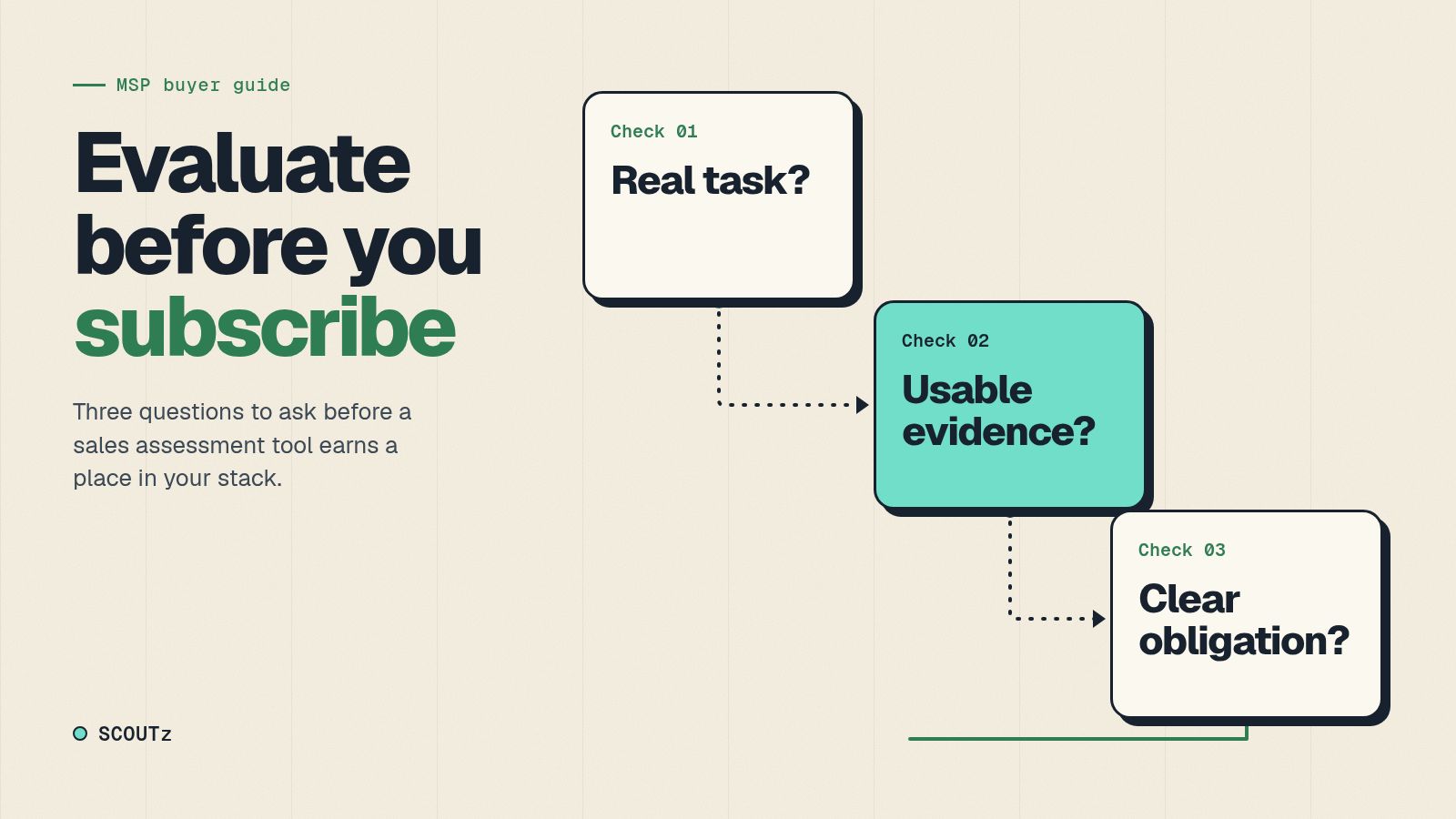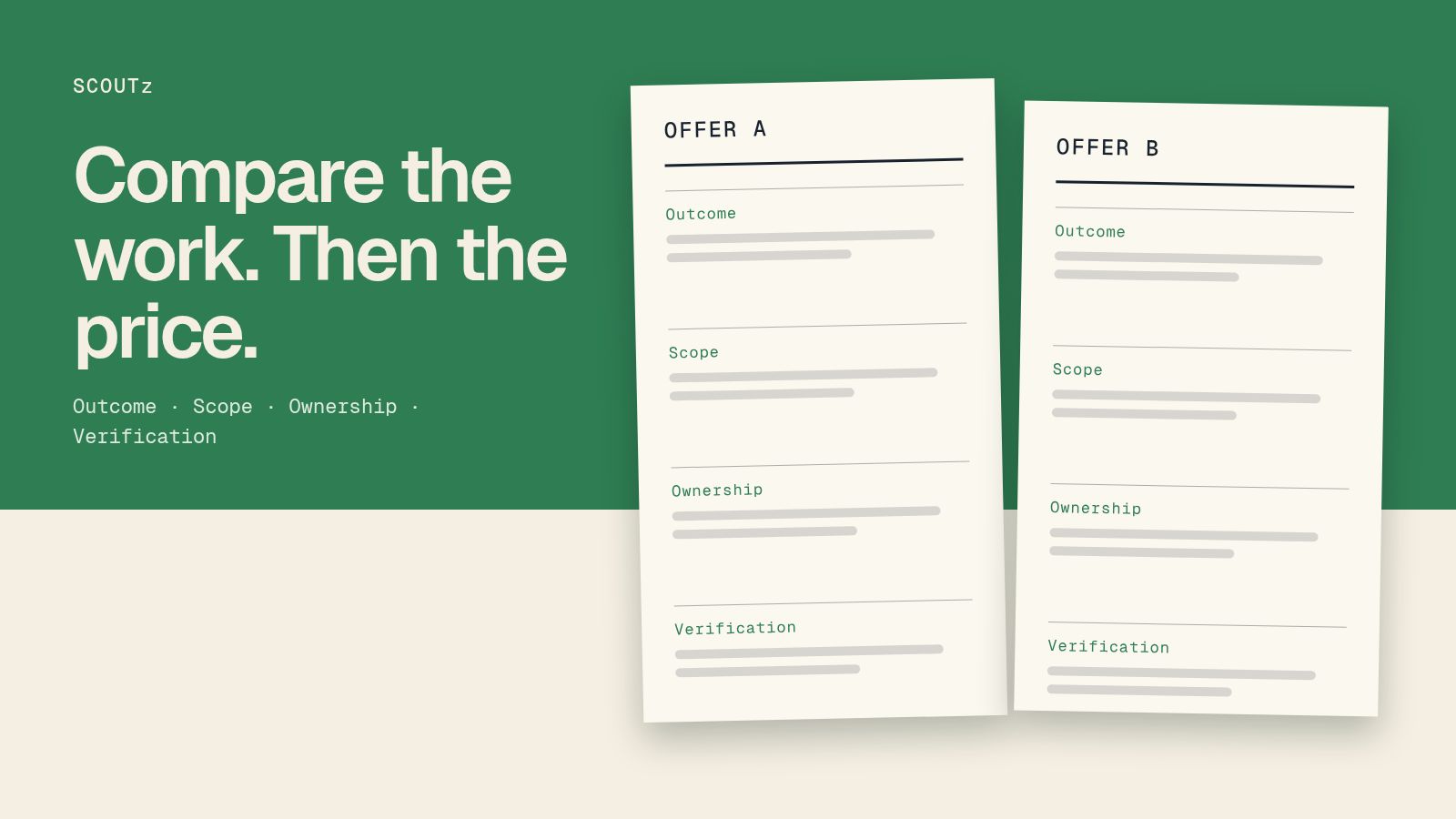
To compete with cheaper MSPs, make the buyer's intended outcome, included work and verification comparable before discussing a concession. Use evidence to explain a relevant difference in scope, then ask which commitment the buyer wants. If the offers are equivalent on the facts available, a security finding does not justify claiming yours is better.
- To compete with cheaper MSPs, compare agreed outcomes, scope and verification before changing your offer.
- SCOUTz cybersecurity prospect intelligence gives MSPs dated evidence for a specific scope discussion.
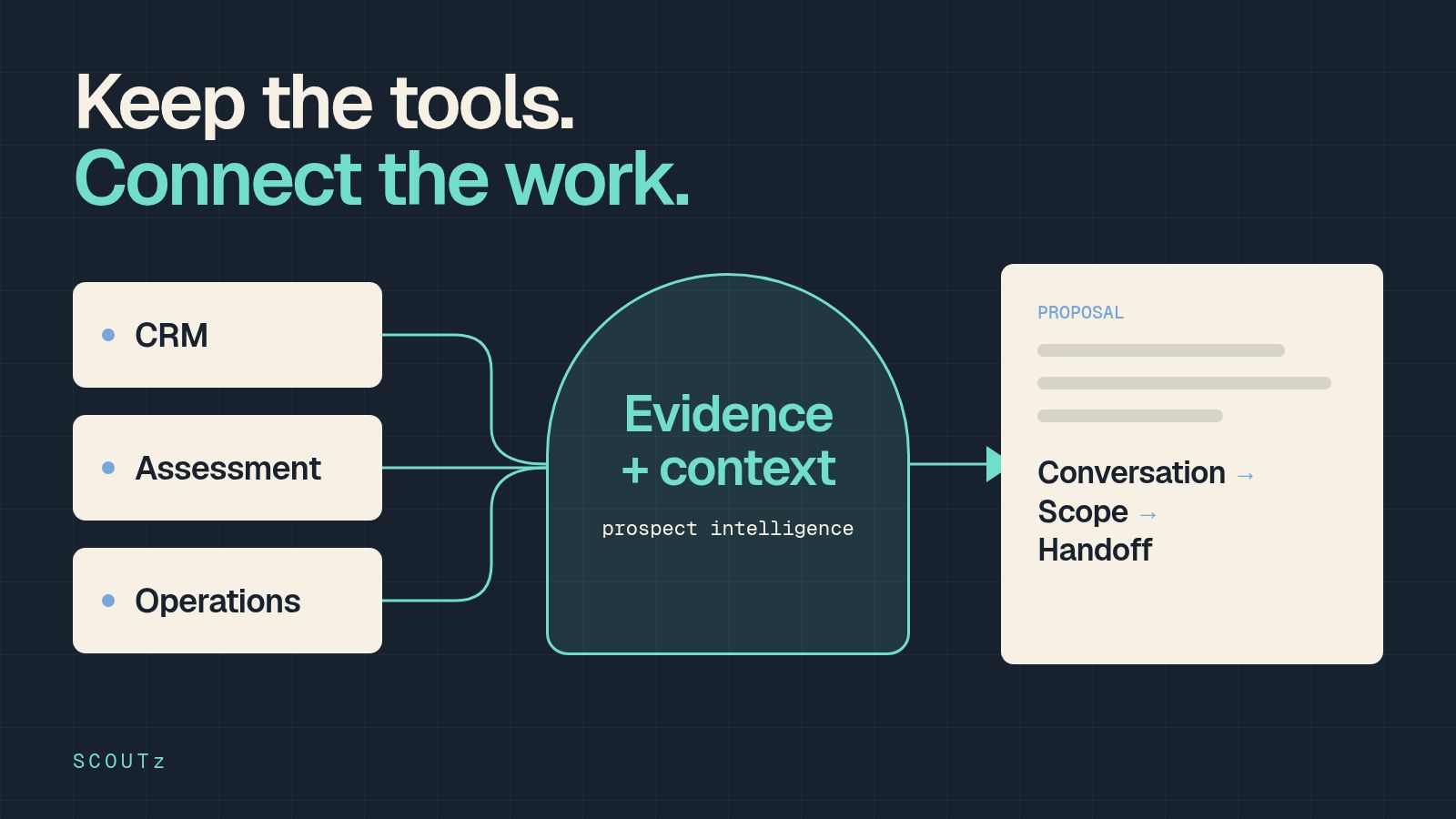
- Use Evidence-to-Agreement to connect a buyer's priority to an inspectable proposal.
- A lower-priced provider can be the right choice when its confirmed scope meets the buyer's needs.
The SCOUTz report workflow includes a Win the deal Report Play for keeping findings and proposed next steps together during scope discussions. The report helps you explain the offer. Your commercial judgment determines what you can responsibly deliver.
Why This Matters
A price objection can identify a budget constraint, an unclear comparison or a difference the buyer does not value. Treat those as separate conversations. More explanation of your technical stack will not settle which one applies.
Your job is to make the choice inspectable. The buyer should see why each deliverable exists, what remains excluded and how completion will be demonstrated. The SCOUTz Evidence-to-Agreement Framework organizes that work into four stages: Find the decision, Bring the evidence, Build the scope and Earn the next commitment.
How to Compete With Cheaper MSPs
Start with the comparison the buyer is actually making. Ask whether the objection concerns affordability, equivalent services or uncertainty about the proposed work. Then identify the evidence needed to resolve it.
| Buyer Statement | What to Establish | Useful Next Action |
|---|---|---|
| Your quote is higher | Whether the scopes are equivalent | Review confirmed inclusions and exclusions |
| We cannot fund this | The actual spending constraint | Evaluate an affordable, responsible scope or stop |
| Our provider already does this | The current commitment and its evidence | Confirm the existing arrangement with the buyer |
| We do not need all of this | Which outcomes matter | Remove optional work only when dependencies allow |
| I cannot explain the difference | Whether the proposal makes its reasoning visible | Prepare an audience-appropriate scope comparison |
This table is a conversation aid. It does not establish why a real prospect objected until that person explains the concern.
Find the Decision Behind the Price Objection
Acknowledge the comparison directly. Avoid responding as though choosing the lower price is irresponsible.
Illustrative seller wording:
Thanks for being direct. Is the concern that the total is outside what you can spend, or that you cannot see a relevant difference between the offers?
If affordability is the constraint, establish whether any narrower outcome is worth evaluating. If the buyer sees equivalent work, inspect the commitments side by side. If the concern remains unclear, do not invent a reason they should stretch.
For a 2026 proposal review, record the buyer's requirement in their words. A request for less management effort differs from a request for an assessment report. Each can justify a different scope and neither automatically requires changing providers.
The decision to pursue is yours too. A prospect whose required work cannot be delivered within their constraint is not made viable by better objection-handling language.
Bring the Evidence That Explains the Work
Choose an observation that connects to the requested outcome. State what it establishes and what additional context is required.
Illustrative training example: a dated public review records a DMARC policy requesting monitoring only. The buyer says they want an accountable process for reviewing the intended policy. That combination supports discussing ownership, validation and an agreed change process if a change is needed.
It does not support a forecast of a breach, a claim that the incumbent failed or an assertion that your full managed-service package is necessary. Explain the work you would perform and the verification you would provide.
Use three components in your explanation:
- Observation: the published policy recorded at the stated run date.
- Buyer context: the owner wants to establish responsibility and the intended state.
- Proposed work: confirm the intended policy, agree any changes and verify the outcome against the retained baseline.
A public observation also stays separate from internal Microsoft 365 configuration evidence. Customer authorization is required for the latter review; neither review is permission to make changes.
Build a Like-for-Like Scope Comparison
Compare commitments the buyer can confirm. Leave the other offer unknown where its scope is unavailable. Do not fill the gaps with assumptions about what a cheaper provider probably excludes.
| Comparison Field | Your Offer | Other Offer |
|---|---|---|
| Buyer outcome | State the agreed outcome | Record the confirmed outcome |
| Evidence review | Name sources and review responsibilities | Record only confirmed coverage |
| Implementation | Separate included changes from recommendations | Mark unconfirmed changes unknown |
| Authorization | State review and change approval requirements | Ask for clarification where needed |
| Acceptance | Define what completed delivery means | Record the stated acceptance condition |
| Verification | Identify baseline and repeat check | Record confirmed evidence of change |
| Ongoing ownership | Name the contracted responsibility | Record current written commitments |
In a 2026 comparison, use the versions the buyer actually received. A revised offer should identify what changed, so the eventual decision is not compared with an obsolete scope.
SCOUTz cybersecurity prospect intelligence supplies the dated findings behind your discussion. It does not score competitors or establish that a higher fee is warranted. Your proposal needs its own inspectable commitments.
A Worked Response to “You're More Expensive”
The following dialogue illustrates a scope discussion. It is not a customer story or a claim about any provider's actual services.
Buyer: “Our current provider says they can give us a report for less.”
Seller: “Then let's compare the work you want. Are you buying a report to understand the current state, or do you also want an agreed implementation and verification plan?”
Buyer: “I want to know somebody will own the next steps.”
Seller: “Our proposed scope includes identifying the owner, agreeing the authorized work and showing what changed afterward. I do not know whether their offer includes the same commitments. Can we compare those fields before you choose?”
Buyer: “If they include those too, why would we pay more?”
Seller: “You should evaluate equivalent work as equivalent. We need to explain any other relevant difference using our actual commitments, not assume the lower price means something is missing.”
The conversation has moved from defending your worth to establishing a purchasing criterion. The seller still needs to support any claim about experience, delivery or service terms with real evidence.
Earn the Next Commitment Without Forcing a Choice
Ask for a scope review with the person who can resolve the remaining uncertainty. Explain what that meeting will settle.
Illustrative close:
We have identified the comparison that matters: ownership and verification after the review. Should we confirm those commitments together, or is the current arrangement already sufficient for you?
If the buyer agrees, send a short agenda and the relevant evidence. If the current arrangement is sufficient, record that answer. Pressure cannot turn an unnecessary scope into a good recommendation.
For a 2026 opportunity record, use an explicit result: scope clarification requested, affordability constraint confirmed, comparison completed or no change selected. Those records are more useful for sales coaching than recording every objection as a lack of perceived value.
Reduce Scope Only When It Remains Deliverable
A responsible alternative begins with the outcome the buyer still wants. Remove optional work before changing commitments that the remaining work depends on.
For example, an assessment-only engagement and an implementation engagement can have different deliverables. If you offer the narrower option, state that later changes require a separate agreement. Do not imply that a report purchase includes remediation.
Before presenting a revised offer:
- Confirm the retained outcome with the buyer.
- Identify required review and authorization steps.
- Mark optional work and dependencies.
- Define exclusions in the revised document.
- State the new acceptance condition.
- Obtain approval for that version.
This is a scope method, not a recommendation to discount. The provider must decide whether the proposed obligation is commercially sustainable. A lower fee with unchanged responsibilities is a different choice from less work.
Give the Owner a Buyer-Ready Explanation
An owner should be able to explain your proposed scope without learning the whole technical stack. Write the connection between the observed condition, the requested outcome and the deliverable.
Illustrative explanation:
You asked for visibility into completed work. This proposal defines who approves the change, who performs it and what evidence you receive afterward. The attached finding explains where this review starts. The acceptance condition explains where this engagement ends.
This explanation is appropriate only when those commitments actually appear in your offer. Do not use reporting language to imply a service you have not agreed to provide.
The client-safe report supports the owner conversation; the operator report retains technical detail for review. The product reporting page checked October 24, 2026, identifies current Report Plays while distinguishing the visual Report Studio still in validation. Keep that distinction when demonstrating the workflow.
Avoid Comparisons You Cannot Support
Tool counts, security scores and dramatic scenarios are poor substitutes for contract commitments. None establishes that the other offer will fail.
Avoid these moves:
- Predicting downtime from a public-domain observation.
- Treating unread internal controls as missing.
- Describing a competitor's unknown scope as excluded.
- Presenting a seller-created illustration as customer proof.
- Claiming a rescan will verify work outside its coverage.
Name the evidence that would resolve each uncertainty. If it is unavailable, preserve the limit in the proposal. That prevents your sales narrative from becoming an obligation the delivery team cannot justify.
Learn From the Buyer’s Actual Choice
Record what the buyer says mattered. A confirmed technical difference can be real without being important to this buyer. Do not rewrite a price-sensitive loss as proof that the prospect ignored security.
Review whether your team established the desired outcome, compared equivalent work, explained real differences and offered an appropriate next decision. If any of those steps is missing, improve the proposal process before changing the message.
In your 2026 sales review, separate commercial fit from presentation quality. A well-explained offer can still lose. The framework helps preserve the reasoning so your next decision has a factual starting point.
FAQ
How do you compete with cheaper MSPs?
Compare the buyer's required outcome, included work and verification before discussing a concession. Explain only differences you can substantiate and leave unknown competitor commitments unresolved.
What should an MSP say when a prospect says the quote is too high?
Ask whether the issue is affordability or an unclear difference between the offers. Resolve the relevant constraint before revising scope or commercial terms.
Can a security finding justify a higher MSP quote?
A finding can explain why particular work deserves review, but it does not establish that your fee is justified. Connect the observation to agreed deliverables and actual commitments.
Should an MSP criticize the incumbent provider?
Correct a specific claim only when you can verify it. A public-domain observation does not establish why another provider chose a configuration or what its agreement includes.
How does SCOUTz support a price-objection conversation?
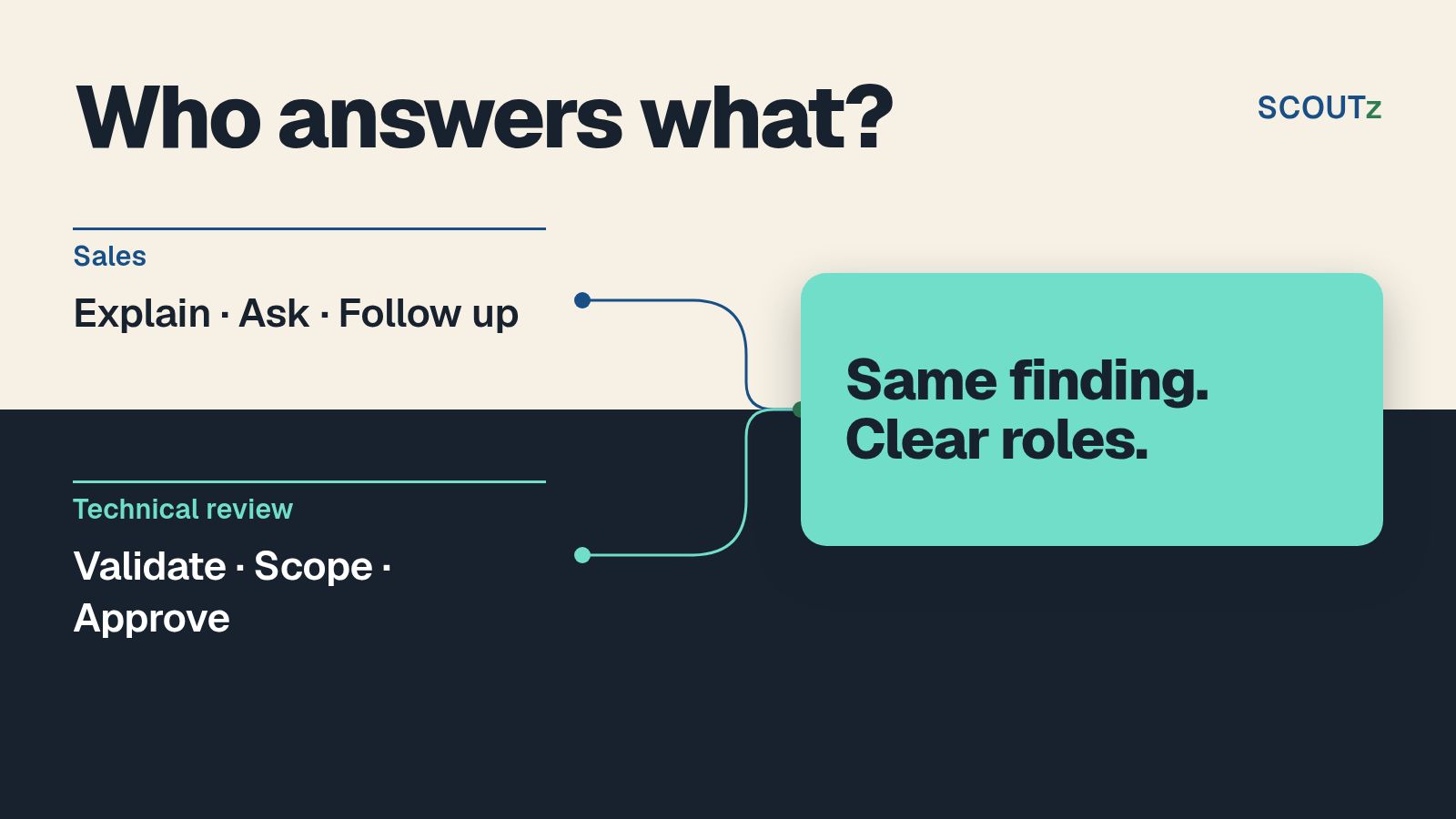
SCOUTz provides dated findings and audience-appropriate reports that support a specific scope discussion. The MSP chooses the recommendation, commercial terms and next action.
What if the cheaper MSP offers equivalent work?
Treat equivalent confirmed work as equivalent. Explain any other relevant difference honestly, and accept that the lower-priced provider can be the appropriate choice.
One Last Thing
The scope you remove must disappear from the promise too. A narrower offer that keeps the original sales language creates confusion at onboarding. Use the same retained evidence and acceptance condition when sales hands the agreement to delivery.
Bring an actual 2026 proposal question to Join Open Beta and evaluate the evidence-to-scope workflow against your own process.